


Can an LED solar light work reliably during cloudy and rainy weather? Yes, with suitable panel capacity, battery storage, and power management. However, actual performance depends on local sunlight and operating conditions.
For commercial buyers, weather reliability affects project value. A road contractor may install lights along rural routes. A property manager may illuminate a large parking area. Both need dependable nighttime lighting and manageable maintenance costs.
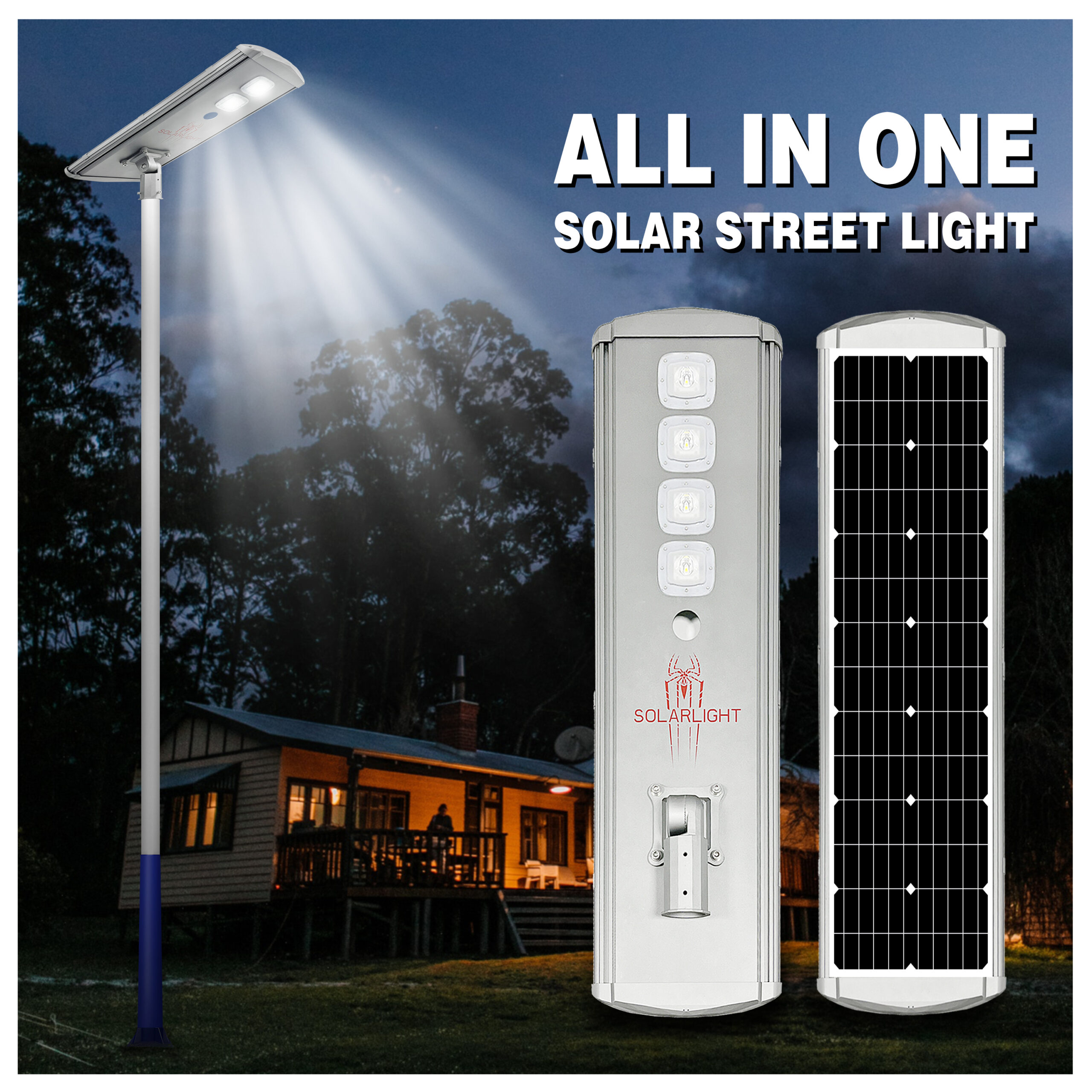
The featured 70-watt integrated solar street light combines solar charging, battery storage, and LED illumination. Its smart controls also adjust brightness according to activity. These features help manage energy during changing weather.

Can an LED Solar Light Charge During Cloudy Weather?
Understand Solar Panel Performance
Clouds reduce the sunlight reaching solar panels. However, they do not stop all solar energy production. Monocrystalline panels can still generate electricity under diffuse daylight.
The featured LED solar light uses a monocrystalline silicon panel. It supports daytime charging in different light conditions. However, charging speed depends on cloud density and daylight duration.
Consider a commercial pathway during several overcast days. The panel may collect less energy each day. Therefore, the battery needs enough stored capacity for nighttime operation.
For bulk projects, ask suppliers for charging test data. Confirm panel wattage and charging current. Also review performance under low-irradiance conditions.

How Does Battery Storage Support Rainy Weather Operation?
Check Backup Capacity and Energy Management
Solar lighting relies on stored energy after sunset. Therefore, battery capacity plays a central role. It determines how much energy remains available overnight.
The product description claims three to five days of backup. However, actual duration depends on battery capacity and usage. Brightness settings and motion activity also influence runtime.
Imagine a parking lot experiencing consecutive rainy days. Vehicle movement changes throughout the night. Smart dimming can reduce output during quiet periods. Then motion detection can increase brightness when needed.
This approach helps manage available battery energy. Still, buyers should request battery specifications. Confirm capacity, chemistry, charging protection, and cycle-life data.

Can Smart Controls Extend Solar Street Light Runtime?
Use Motion Detection and Scheduled Dimming
Continuous full brightness consumes more stored energy. Therefore, intelligent lighting controls can improve energy management.
This model combines a light sensor, timer, and motion detection. The light sensor responds to ambient brightness. The timer controls scheduled operating periods. Motion detection adjusts brightness according to activity.
For example, a residential road may have limited traffic overnight. The light can use a lower brightness setting during quiet periods. When pedestrians or vehicles approach, motion detection can raise output.
These functions support more flexible operation. However, buyers should confirm available control modes. Ask about dimming levels, sensor range, and timer settings.

Is an Integrated Solar Street Light Suitable for Rainy Outdoor Sites?
Review Housing Protection and Installation Details
Outdoor lighting faces rain, dust, humidity, and temperature changes. Therefore, enclosure quality matters for long-term use.
The featured model uses an integrated housing. Its design reduces separate wiring requirements. It also includes dual lamp strips and optical lenses.
These components support practical outdoor illumination. The rotatable base also allows directional adjustment. Installers can align the light with site requirements.
For example, a contractor may install units along a public pathway. Each location may have different pole directions. Adjustable mounting helps simplify alignment.
However, buyers should verify the protection rating. Request IP test documentation and corrosion information. Also confirm suitable operating temperatures and installation limits.
How Can Bulk Buyers Evaluate Weather Reliability and Value?
Compare Functional Features With Project Requirements
A competitive purchase price matters for large projects. However, buyers should also assess energy storage and maintenance. These factors influence total ownership costs.
The 70-watt model combines several practical features. Its monocrystalline panel supports solar charging. Smart controls help manage nighttime consumption. Its integrated structure simplifies installation planning.
| Evaluation item | Featured product | Buyer verification |
|---|---|---|
| Rated LED power | 70 watts | Confirm measured light output |
| Solar panel | Monocrystalline silicon | Confirm panel wattage |
| LED package | 3030 LED beads | Request lumen and optical data |
| Lighting control | Light sensor, timer, motion detection | Confirm operating modes |
| Backup duration | Three to five days claimed | Request test conditions |
| Mounting | Rotatable base | Check pole compatibility |
| Structure | Integrated design | Confirm housing materials |
| Weather protection | Outdoor waterproof design claimed | Request IP test report |
For distributors, consistent specifications simplify repeat orders. For contractors, reliable support helps coordinate installation. Therefore, review warranty terms and spare parts availability.
Before bulk purchasing, request a sample unit. Test charging and lighting schedules locally. Also evaluate performance during cloudy periods.
Explore our solar lighting product range for additional project options. You can also consult our technical guides before confirming specifications.
What Should Buyers Confirm Before Ordering?
Ask suppliers for complete technical documentation. Confirm battery capacity and solar panel output. Request runtime data under defined weather conditions.
Also clarify sensor settings and remote control options. Check installation accessories and packaging details. These steps help reduce procurement uncertainty.
Q&A: LED Solar Lights in Cloudy and Rainy Weather
Q1: Can an LED solar light charge on cloudy days?
Yes. Solar panels can generate electricity from diffuse daylight. However, charging usually decreases with weaker sunlight.
Q2: How long can this 70-watt model operate during poor weather?
The product description claims three to five days. Ask the supplier for supporting test conditions and battery details.
Q3: Does motion detection help during rainy periods?
It can reduce energy use during quiet periods. The light increases brightness when movement occurs. Actual savings depend on sensor settings and traffic.
Q4: What should buyers check for rainy locations?
Review enclosure protection and corrosion resistance. Also confirm battery performance and drainage design.
Q5: Is this model suitable for bulk outdoor projects?
It offers integrated installation and smart controls. Buyers should verify lighting data and battery capacity first. Then evaluate samples under local weather conditions.


